
0
Galbot G1
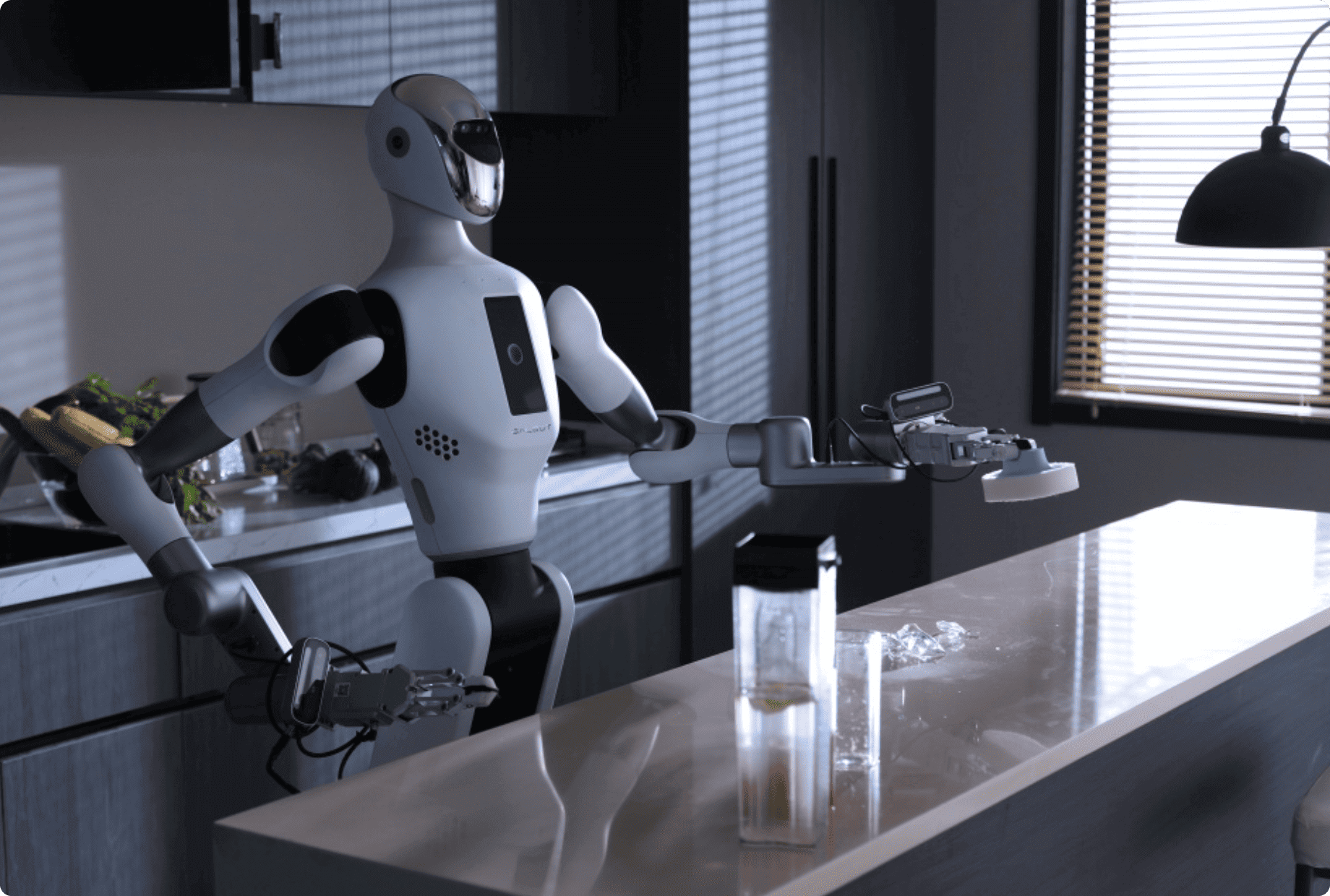
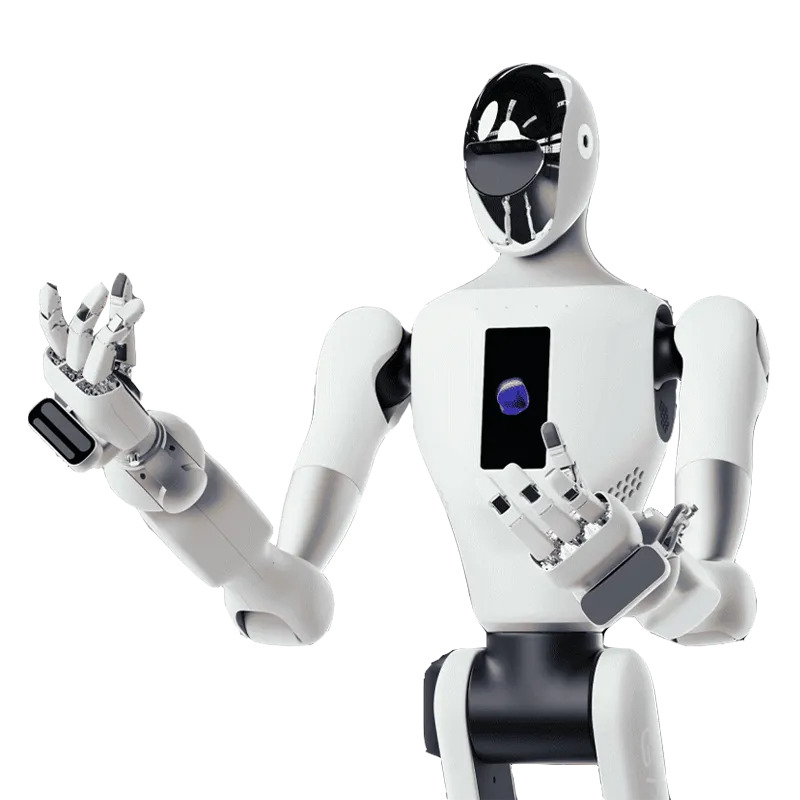
Galbot G1 is a humanoid robot with dual-arm dexterity, 5 kg payload, 10-hour runtime, and advanced AI for industrial automation, manufacturing, and collaborative tasks.
Description
Software Package
AI-driven control and adaptive learning algorithms. Multi-modal sensor fusion and perception software. Voice recognition and natural language processing. Cloud-based update and monitoring platform.
Actuators
Equipped with advanced actuators enabling precise, human-like dual-arm manipulation with flexibility to handle various materials and shapes.
Compiute
Powered by a high-performance 8-core CPU and AI processors supporting real-time perception, decision-making, and control.
Sensors
Includes visual cameras and tactile sensors for accurate environment perception and object manipulation.
Max Op. time
600
mins
The Galbot G1 is a next-generation humanoid robot designed to deliver advanced automation across service, retail, logistics, and industrial environments. Combining artificial intelligence, precision motion control, and human-like interaction capabilities, the G1 offers a flexible robotics solution for modern businesses seeking efficiency and innovation.
Engineered with a stable bipedal locomotion system, the Galbot G1 can navigate complex indoor environments, maintain balance, and perform smooth, natural movements. Its multi-joint robotic arms enable accurate object handling and task execution, making it suitable for repetitive operations as well as customer-facing roles.
The robot is equipped with advanced vision systems and intelligent perception algorithms, allowing it to recognize objects, interpret surroundings, and interact with people in real time. Its AI framework supports autonomous operation and can be trained for specific workflows, reducing the need for manual programming.
Designed for scalability, the Galbot G1 supports continuous software updates and integration with existing digital infrastructure. It is an ideal solution for organizations aiming to enhance productivity, reduce operational costs, and implement cutting-edge robotic systems.
Key Features
Humanoid robot with AI-driven control system
Stable bipedal walking and dynamic balance
Multi-degree-of-freedom arms for precise manipulation
Advanced vision and environment perception
Autonomous navigation and task execution
Human-robot interaction capabilities
Modular software architecture for customization
Suitable for commercial and industrial use
Specifications
General
Model: Galbot G1
Robot Type: Humanoid AI Robot
Application: Service, retail, logistics, industrial automation
Dimensions and Weight
Height: approximately 1600 to 1750 mm
Weight: approximately 40 to 55 kg
Performance
Mobility: bipedal walking with balance control
Operating Time: up to 8 to 10 hours depending on usage
Speed: adaptive walking speed with obstacle avoidance
Hardware
Actuators: high-precision electric actuators
Sensors:
vision cameras
depth sensors
inertial measurement unit
force and position sensors
Software and AI
AI perception and decision-making system
Autonomous navigation algorithms
Human interaction and speech interface support
Machine learning and task adaptation
Remote monitoring and control
Connectivity
Wi-Fi
Bluetooth
Ethernet and USB interfaces
Capabilities
Object detection and handling
Autonomous navigation
Human interaction and assistance
Task automation in structured environments
Applications
Retail assistance and customer service
Warehouse and logistics automation
Reception and hospitality roles
Inspection and monitoring tasks
Research and development
Reviews
There are yet no reviews for this product.